
Slow the water. Protect the upper Deben. Restore the river.
There is a proven approach to managing flood risk that works with nature rather than
against it. It is already working in other parts of England. Its started here and we want to accelerate it in the
upper Deben — at the scale needed to make a real difference.
Natural Flood Management - Explained
Natural flood management (NFM) means intervening upstream to slow water down, hold it back, and release it gradually — before it reaches people's homes. Think of it as giving the river room to breathe. These are not radical new ideas. They are well-established techniques, backed by a growing body of evidence, that are now being adopted by rivers across the UK. What makes them work is scale — they need to happen across the whole catchment, not just in one field. Its called the Catchment Based Approach.
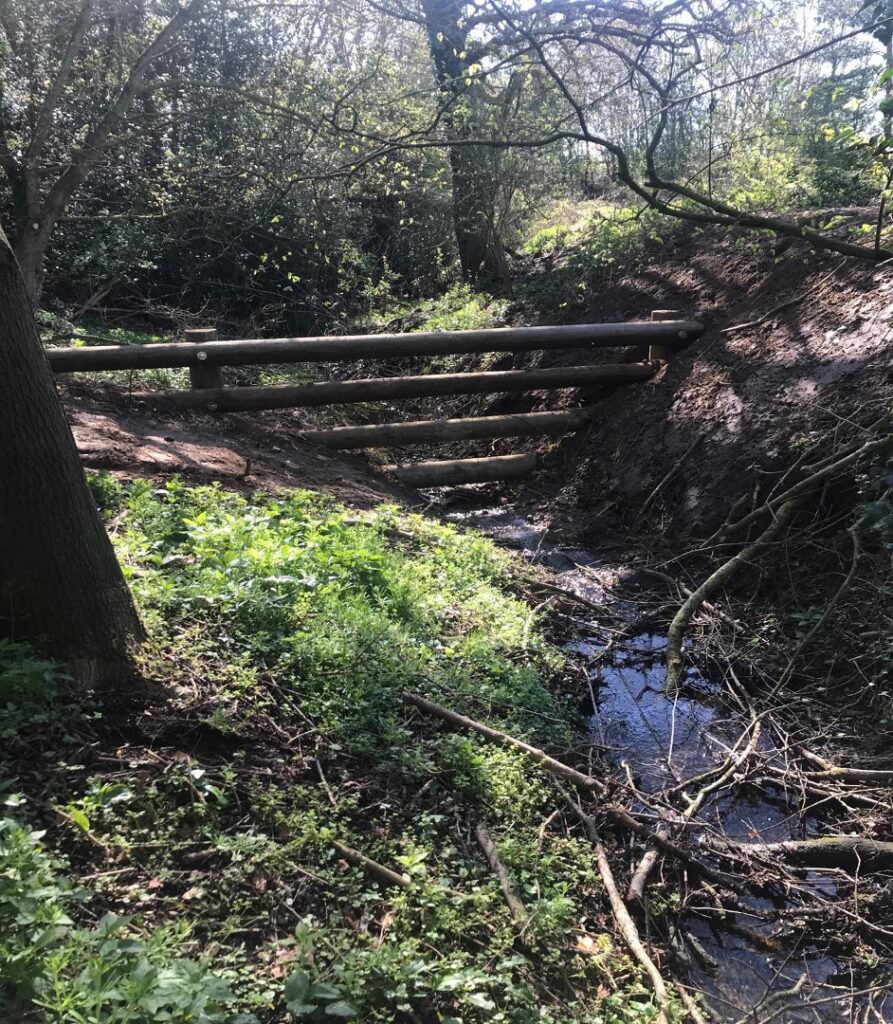
Step 1 — Leaky barriers and bunds
Simple wooden or earth structures placed in ditches and streams that slow the flow and hold water back, releasing it gradually.
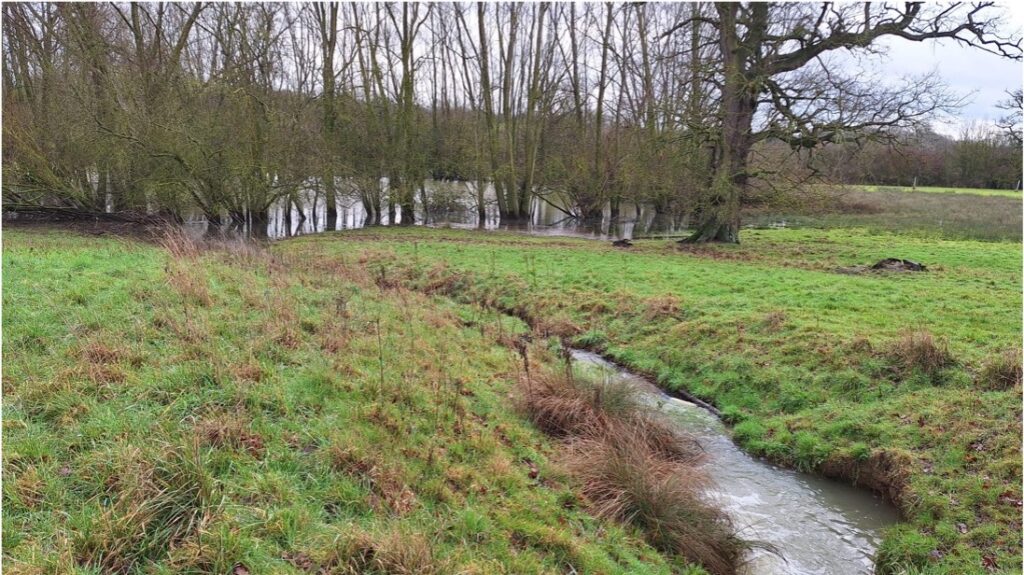
Step 2 — Floodplain restoration
Returning low-lying land beside the Deben to natural wetland that absorbs and stores floodwater safely.
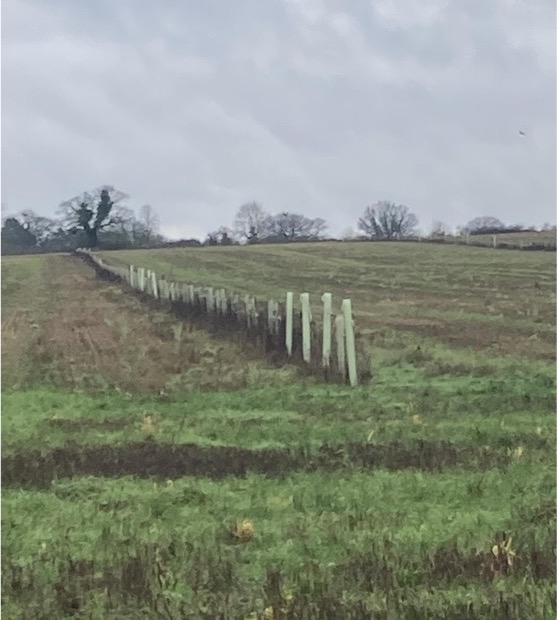
Step 3 — Tree planting and hedgerows
Planting trees and restoring hedgerows at field margins slows surface runoff and
improves soil structure over time. This can include agroforestry – highly productive, more nature-based farming that reintegrates trees into the landscape.
Trees support biodiversity, soil health, increase ground water water penetration, and improve water quality.
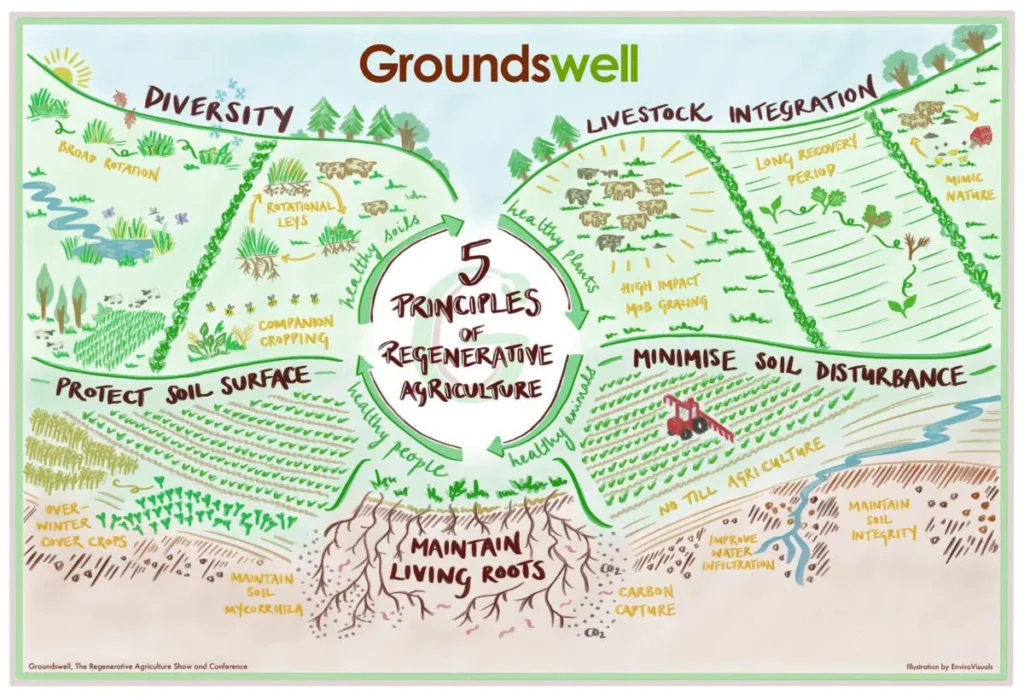
Step 4 — Cover crops and soil health
Working with farmers on soil management practices that improve the land and ability to absorb water during heavy rainfall.
Healthier soils mean better productivity, less run off and silting of rivers, improving water quality.
Step 5 — Slow the flow even more
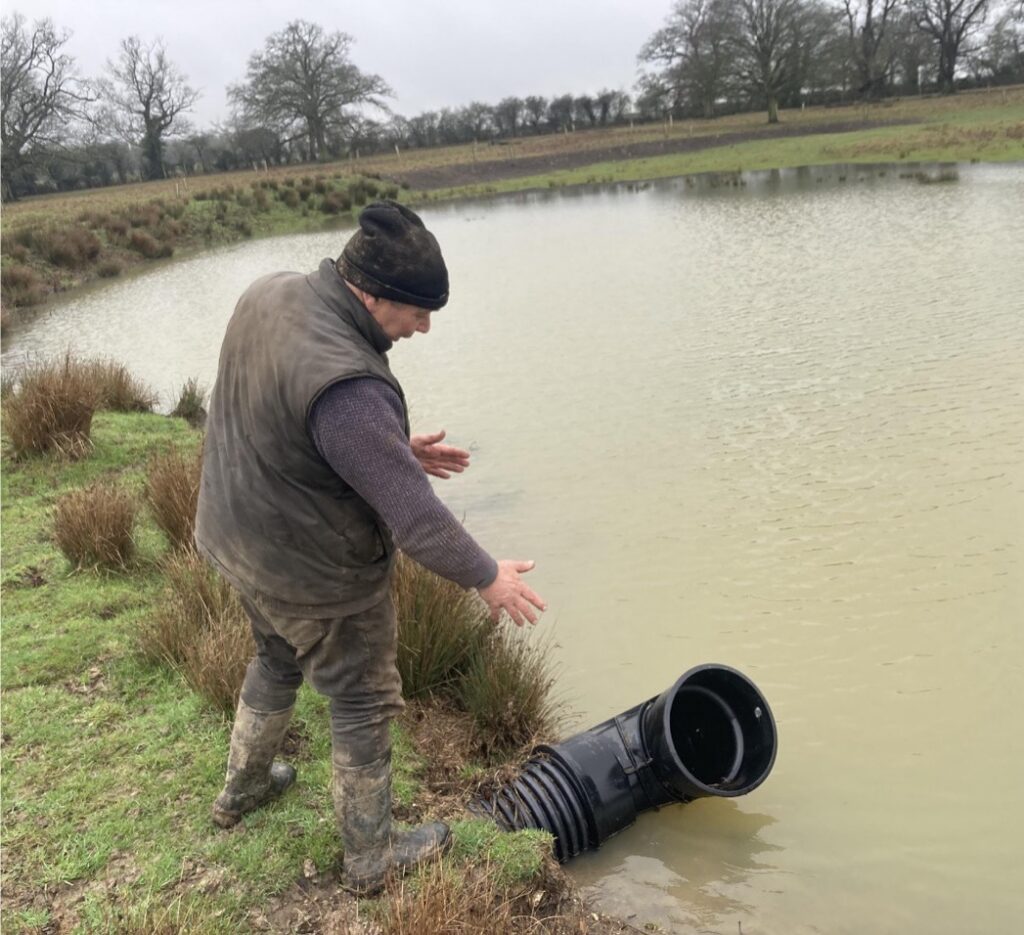
Farm ponds and attenuation ponds hold water in high flow, like a leaky barrier, just more of it, slowly draining back into the system, but leaving a small amount of residual water that supports wildlife. many are engineered to be able to control the volume of water held, like this example at Helmingham Estate.
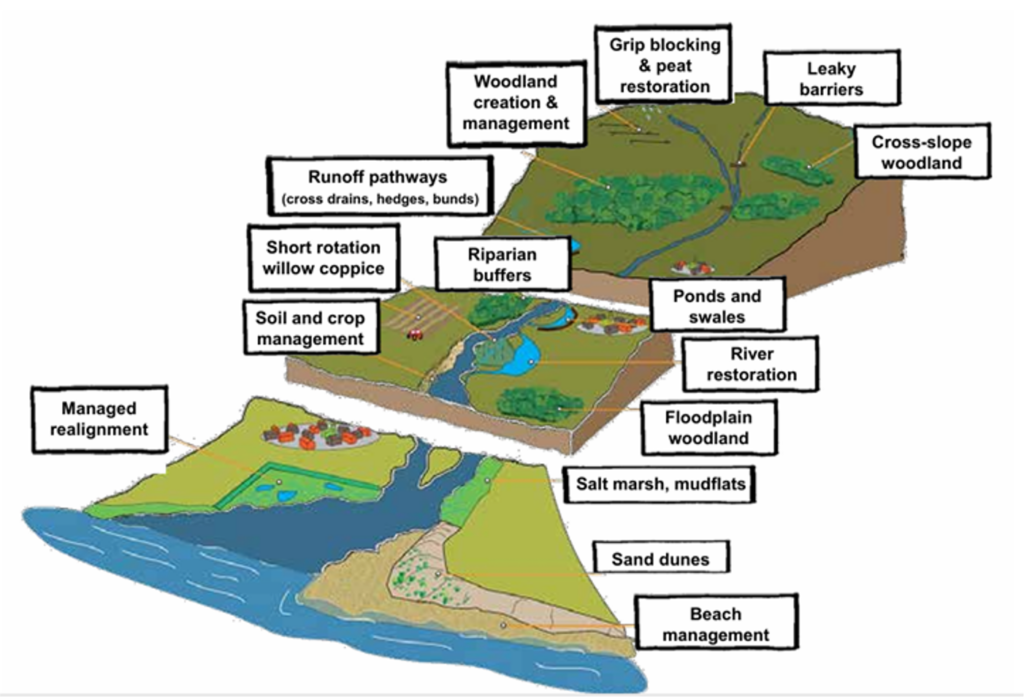
The solution is multiple interventions in the right place.
Many small changes can happen quickly that contribute a cumulative effect. Bigger engineering projects take longer but again, the more there are the better we are, the healthier our river is. As we shift towards farming based on catchment sensitive methods the more we restore natural ecological processes which supports biodiversity and protects us.
£1.4 billion is available nationally. We want our share.
Government and charitable funding for natural flood management exists — but it requires coordinated, evidence-based bids from organised groups. That is precisely what UDOG is designed to do. As a community membership charity with scientific backing we are well placed to access funding that individual landowners or households cannot apply for alone.
We will also work with Parish Councils, Suffolk and Mid Suffolk Councils, the Environment Agency, and other statutory bodies to ensure the upper Deben is prioritised in future investment plans.
Joining is free. Your donation really helps.