
Why do floods happen?
What happened in 2023? Storm Babet was not a freak event. It was a warning. There are three key factors at play:
1. We’ve managed our landscape badly historically, losing natural flooding barriers, habitats and processes that would have protected communities.
2. Climate change is increasing extreme weather events.
And we don’t think our heavily bureaucratic, multi-agency and multi-sector institutions of government that make decisions can respond quickly enough to cope. This leads to a:
3. Lack of joined-up, long-term thinking.
“Events like Storm Babet are going to happen more frequently. We cannot
simply wait for the next one.”
— UDOG founding statement, 2026
A bit more detail…
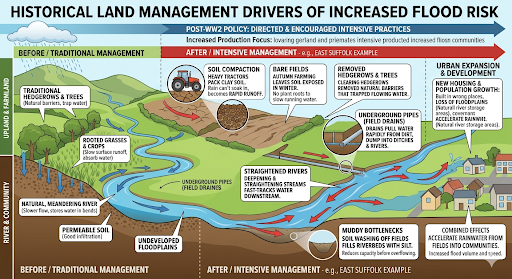
Many landowners and farmers in the upper Deben have managed this land for generations, using
practices that made sense for the conditions of the times and reflecting the advice and policy to intensify production.
This has, over the decades led to increases in:
- Soil Compaction: Heavy tractors pack the clay soil tight, preventing rain from soaking in
- Bare Fields: Autumn farming leaves soil exposed in winter, with no plant roots to slow down running water.
- Removed Hedges and trees from fields: Clearing traditional hedgerows took away the natural barriers that used to trap flowing water.
- Straightened Rivers: Deepening and straightening natural streams fast-tracks water downstream much quicker than normal.
- Underground Pipes: Field drains pull water out of the dirt and dump it into ditches, streams and ultimately the river rapidly.
- Muddy Bottlenecks: Soil washing off fields fills riverbeds with mud and silt, reducing the amount of water the rivers can hold before overflowing.
Suffolk is a prime example of this, where historical land and river management have combined to accelerate rain water running from fields and straight into communities.We also need more houses for our growing population. These houses have not always been built in the right places, and we have lost ‘flood plains’ – natural areas for the river to flood into.
Storm Babet
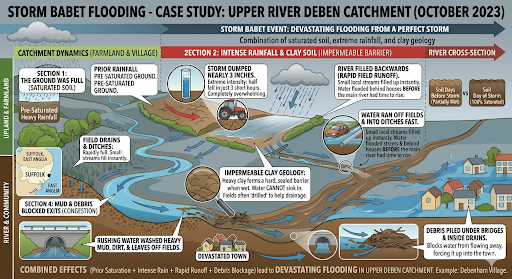
During Storm Babet in October 2023, the upper River Deben catchment (including communities like Debenham) suffered devastating flooding due to a combination of saturated soil from prior rainfall, extreme rainfall intensity, and the area’s impenetrable clay geology. Essentially:
- The ground was full: It had rained heavily just days before the storm. The soil was already like a soaking-wet sponge that could not hold more water.
- Intense rainfall: The storm dumped nearly three inches of rain. Half of that massive total fell in just three short hours, completely overwhelming the area.
- Clay soil blocked the rain: The soils around the upper Deben have a lot of heavy clay. Once clay gets wet, water cannot sink into it. Instead of soaking into the ground, the rain ran across fields and straight into the town. Fields are often ‘drilled’ to help drainage in these types of soils.
- The river filled up backwards: Water ran off the fields and into ditches so fast that small local streams filled up instantly. This water flooded into streets and behind houses before the main river even had time to rise.
- Mud and debris blocked the exits: The rushing water washed heavy mud, dirt, and leaves off the fields and into the river. This debris piled up under bridges and inside drains, blocking the water from flowing away and forcing it up into the town.
Joining is free. Your donation really helps.